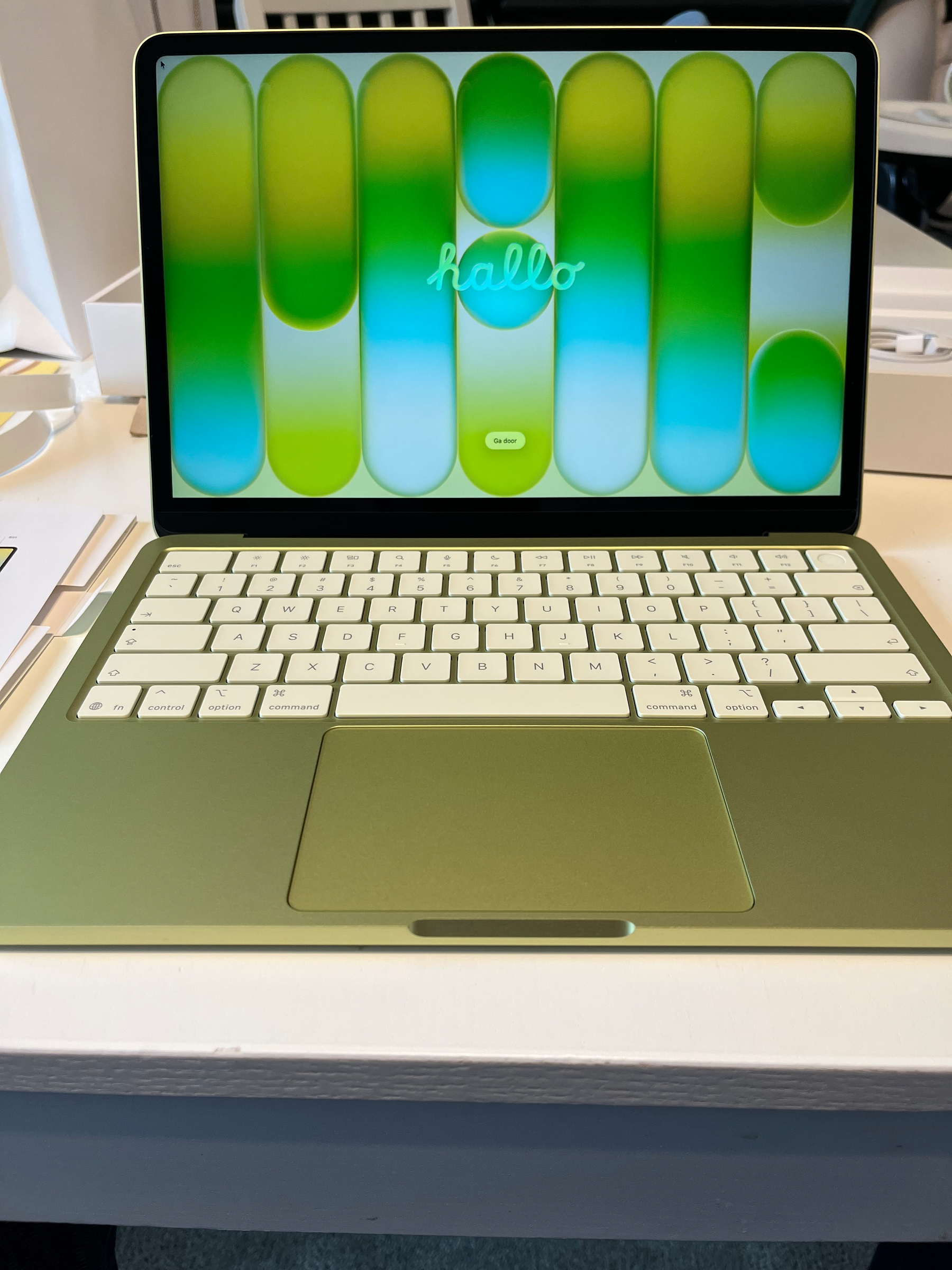
I traded in my M1 iPad Air for a MacBook Neo. It’s the first MacBook I’ve owned since December of 2018 (…which on short reflection is a little over two laps around the sun from being 10 years ago…yikes.). It feels good to be back.
A 20 Year Relationship
The first PC that I purchased with my own money was a [white polycarbonate MacBook](https://en.wikipedia.org/wiki/MacBook_(2006%E2%80%932012) procured in 2006 with the scrounged-together proceeds of high school graduation gifts, and an office supply warehouse job I’d held the summer after the preceding junior year. Macs have always had their maddening quirks; I still remember purchasing the tape that would help prevent skin oils from staining the palm rests yellow.
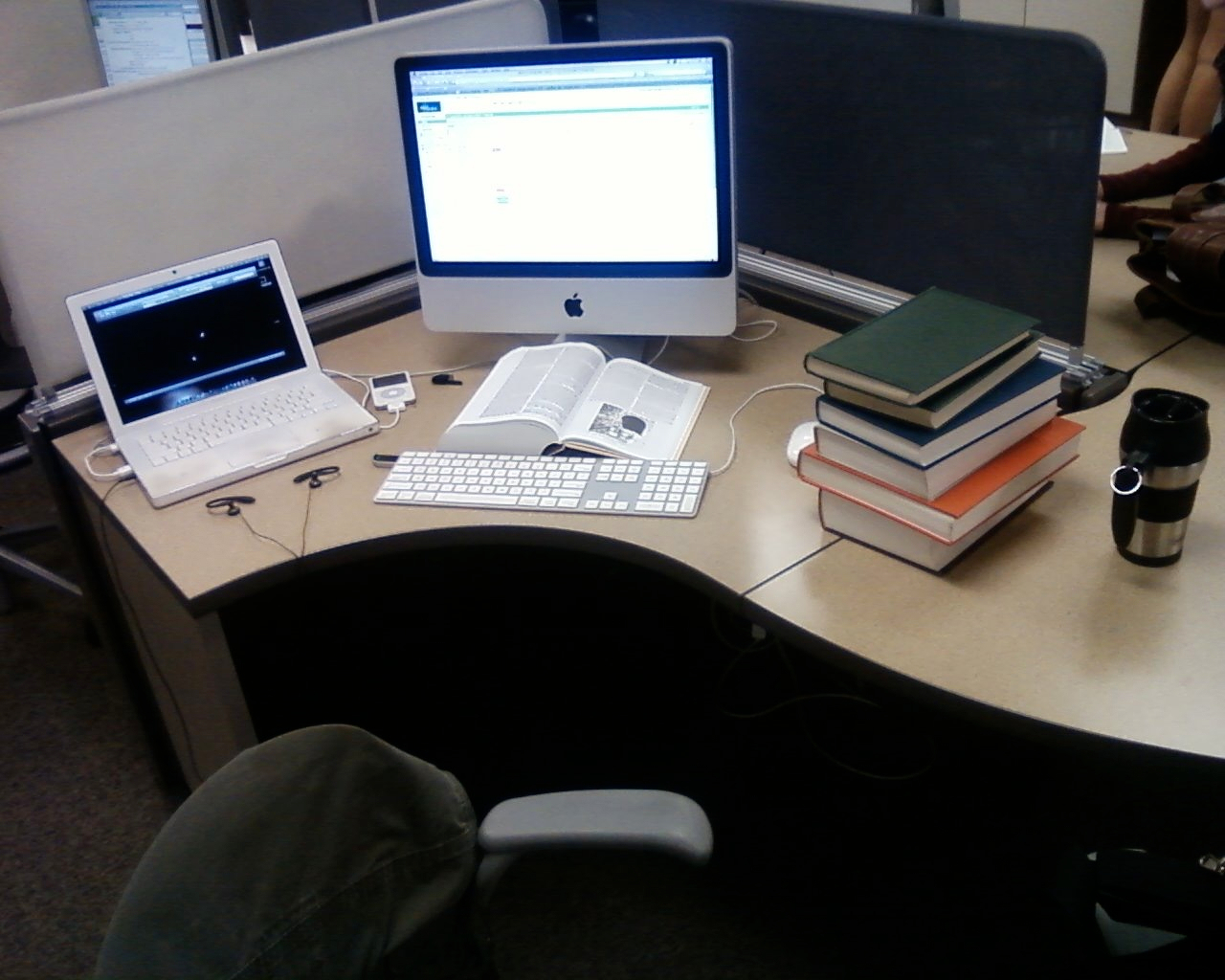
It’s giving early 2000s vibes…
It was a good machine that served me well. I recall purchasing additional RAM and a hybrid SSD from OWC to squeeze an extra year or 2 of life out of it. I loved that MacBook; it accompanied me through some of the most significant transitions of my young adulthood–through obtaining a bachelor’s degree, marriage (my spouse brought her own polycarbonate MacBook into our household), a cross-country move, and the Master’s program that predicated it.

A self-portrait from college. Hours were lost (procrastinating) taking photos on my original Macbook with Photobooth.
I eventually upgraded to an aluminum MacBook Pro. My spouse traded in hers for a MacBook Air. As the end of 2018 approached, I had ambitions for a long-term change in my personal computing relationship to Apple devices. I envisioned a future with motherships and runabouts. For most of elementary school, my family had a Dell tower PC on which I spent many hours playing Age of Empires and Command and Conquer (the O.G. Red Alert remains undefeated as the franchise’s best). Around the transition from middle school to high school, my dad purchased an iMac G5, and we never looked back to Windows. I remembered that G5 fondly and wanted to return to a setup where a desktop computer with a large monitor and peripherals was the workhorse for most administrative tasks, and a lighter device could be used for streaming and emails. In anticipation for this transition, I traded in the Macbook Pro for an 2018 intel Mac Mini (which we still use too this day as our home mothership).
Ultimately, I bought into the marketing hype (remember the ‘What will your verse be’ iPad Air ads?) and wanted to ditch the laptop altogether and embrace an iPad for most daily compute activities. However, with the capabilities of the MacBook Air and Mac Mini we possessed, I didn’t feel I could justify the decrease in functionality. That all changed with a major life transition and the arrival of the M1 chip.
A Shift to a Tablet
Starting a PhD program, and the RISC-V SoC era provided the justification for jettisoning the MacBook Air and “investing” in a tablet. In my head were visions of a computing existence where I carried a light and breezy tablet to lectures or the library. This would evoke the tactile development of knowledge development with pen, and notebook with the computational power of a PC moonlighting as a tablet. On the home front, this dream was practically realized: most of my domestic life computer tasks were amenable to being done on an iPad with a Smart Keyboard. However, in my academic life, as I’ve progressed through my program of study and moved from primarily consuming literature to writing and compiling research, the shortcomings of iPadOS have become glaring.
In my opinion when it comes down to brass tax, most people participating in the “should an iPad run macOS” debate have 1 or 2 very specific use cases or software that inform their opinion on the debate. For me, the use case was Zotero, the citation management software with robust note-taking features, a decent minimalist text editor, and the best PDF reader in the business.
Reckoning with the iPad’s Shortcomings
Using an iPad was great for reading and annotating research papers, but synthesizing that literature into papers and articles proved to be a bridge too far for the iPad. In the context of academia, the iPad is optimized for knowledge consumption; it struggles at knowledge production unless you give yourself completely over to its app-based logic. The iPad is not optimized for open-source software that academics have used for decades to conduct their work. You can technically use LaTeX, Python, or R on an iPad, but you’ll be shelling out a lot of money for the appropriate software and will have limited workflows for moving your content between different publishing tools. Zotero is pleasant to use on an iPad, and you can access a lot of software platforms through a web browser; but the iPad web browsers are all less functional derivatives of Safari/Webkit; all iPad word processors are basically derivatives of Pages. You couldn’t seamlessly port over your citations and bibliography into your word processor of choice as you can with macOS. Beyond functionality limitations, there are ideological reasons I started to sower on the iPad experience. I’ve been convinced that the way Apple manages its app economy is worth resisting for the greater good of the future of computing. MacOS and the devices that run on it hold Apple’s worst profit-driven corporate proclivities at bay.
I’ve watched or listened to an increasing number of lectures or interviews with Cory Doctorow and the vision he casts for how open source software and computer engineering can be a tool for economic justice in the face of monopolistic greed. A key component of that dynamic I had never heard of before engaging his lectures and interviews is the relationship between software licensing, apps, and copyright. The way that copyright law applies to mobile apps vs PC software ensures that a primarily app-based computing system (like a mobile phone or tablet) will be easier to monetize and close off to software developers. It’s the principle of repairability and the right to own your own property with the implied ability to do what you like to improve or modify it applied to 1s and 0s. Continuing to use the iPad further allows Apple to lock up more of their tech products into an ecosystem where they can enshittify to their shareholders’ glutinously greedy glee. A return to the MacBook is an attempt to vote with my dollars that this is not the future I want to encourage Apple to pursue.
Back to the Future
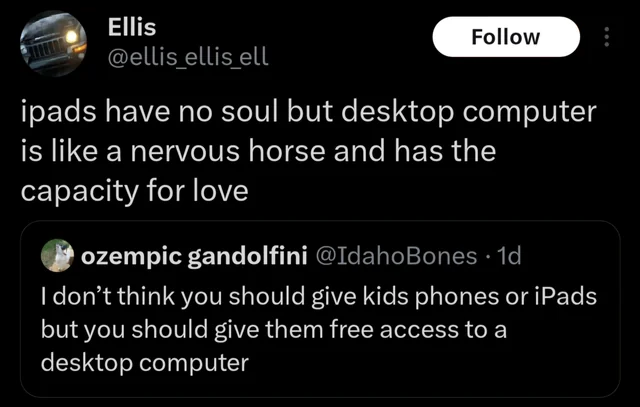
So here I am, composing this post on my first MacBook in almost 10 years. Going back to the Mac truly feels like returning to a well-loved bicycle…for the mind. I recently came across a meme urging the reader to give their children generous access to a desktop computer while limiting their time on tablets. They compared a computer to a nervous horse that can love you, in contrast to the soulless aluminum and glass of the tablet. I agree with the sentiment.
The analogy I’d use for the return is that it’s like picking up a supple, well-worn leather-bound journal that you’ve spent a lot of time with. While my children may grow up in a world where the default is hand held touch screens and styluses, I am thoroughly a product of the desktop and laptop world. It took an 8-year sabbatical to drive home that personal reality.
