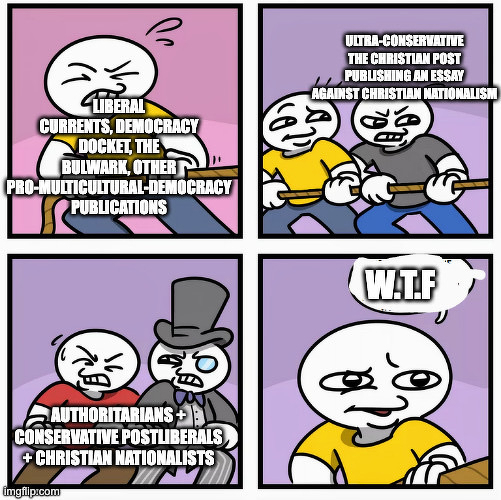
I made an extremely niche meme about The Christian Post publishing an opinion piece condemning Christian Nationalism. Worth noting this was the default position of the politics editor they cancelled half a decade ago.
‘Faith’ encapsulates posts explicit about my personal religiosity, Christianity, or religion in general.
–>
I made an extremely niche meme about The Christian Post publishing an opinion piece condemning Christian Nationalism. Worth noting this was the default position of the politics editor they cancelled half a decade ago.
The digital corner of evangelical Protestantism I occupy has been contending with a prominent apologists Trinitarian theological errors and how best to describe the Doctrine’s essence, so far this has been my favorite primer on the topic.
Sometimes I wonder whether our discomfort with penal substitution is part of a larger discomfort with materiality itself. We would prefer salvation to happen in the realm of ideas. We like it when Jesus teaches, inspires, and models love, and all of those things are wonderful and true. But Christianity insists on something stranger.
A body hangs on a cross.
Blood pours down.
Death takes our Lord.

I encountered a headline recently that Bethany Christian Services will update their protocols and policies to no longer allow LGBTQ+ couples to foster or adopt. This is a reversal of a policy and protocol change they implemented back in 2021.
A couple of quick observations and some nuanced thoughts I think are worth highlighting.
Reporting from the NYTimes back in 2021 dedicated the top half of their coverage to discussing religious exemptions pressures, particularly in Blue/progressive municipalities as a part of the calculus for a more open stance on LGBTQ+ fostering and adoption BUT I was always intrigued by the second half of their coverage that dug deeper into some of the Protestant organizational and cultural fault-lines the decision revealed. Bethany gave a decent amount of autonomy to its local boards/governance structures and their 2021 policy change was meant to lean into the diverse perspectives on this issue you would naturally find for an organization of their breadth and depth.
It’s worth noting that there are individuals, congregations, and whole denominations that consider themselves BOTH affirming of LGBTQ+ identities (with a whole spectrum of positions on how to define that term) AND Christian. Of course, particularly in evangelical circles, the immediate next question after declaring one’s position on sexuality in conjunction with Christian bona fides is to then start a whole line of debate about who truly gets to define themselves as Christian. Also, the evangelical movement’s braided relationship to fundamentalism means that the borders and boundaries of evangelical social/civic engagement has a proclivity to define itself by who must necessarily be excluded from collaboration rather than by defining itself by the breadth of its ecumenism (whether within Christian traditions, other faiths, or those with no faith at all).
I’ve written about this elsewhere. What may look like prudent decisions to protect the integrity of an organization in the face of an immediate crisis or area of internal strife might actually be paving a pathway to long term decline. Whether it’s a shooting or a culture war, all warfare involves a large dose of fluctuating vision-scapes and unpredictability. The institutional capacity and relationships one severs today may include vital connections or social capital that could become invaluable tomorrow.1
Note the substance of Bethany’s governance changes:
One can affirm the Apostle’s and Nicene Creeds, or biblical authority (though possibly not inerrancy) and take radically divergent positions on human sexuality, gender roles, church ecclesiastical structure and so-forth. In the U.S. right now it feels to me like the borders of what counts you as inside or outside the circle of the “Evangelical” movement are your stances on sex and gender. That’s a shame, because 1) It wasn’t always like that and 2) I think evangelical churches and organizations have an important role to play in shoring up the wobbly legs of our multicultural/multiethnic pluralistic democracy. I’ve don’t think the answer for how best to do that is to take a “everyone gets their own corner of the sandbox and you aren’t welcome in my corner” approach to civic engagement. We’ve got to figure out how to live together and find excuses to build stuff TOGETHER. To extend my analogy, Bethany may have a constitutional right to take their toys to their corner in the same way that a socially progressive non-profit has a right to select its staff and volunteers with whatever standard it deems pertinent. But I really wish Bethany had chosen to keep working on the shared castle in the middle of the sandbox.
I’ve set aside any consideration of “religious liberty” concerns wrapped up in this whole discussion about Bethany. Frankly, this Supreme Court is one of the most magnanimous towards faith-based institutions EVER, and apart from a sequence of untimely deaths or radical court-packing I doubt that will change. Legal or constitutional principles open or foreclose avenues for organizational behavior, they shouldn’t necessarily define how organizations make decisions. One could argue, “organization X should take action A because it will shore up our religious freedom precedents;” but I would prefer an organization is making decisions in alignment with Christian empathy, generosity, love, and mercy–constitutional considerations be damned. ↩︎
For Skye’s definition go to 14:04 here: https://holypost.substack.com/p/crotch-christianity ↩︎
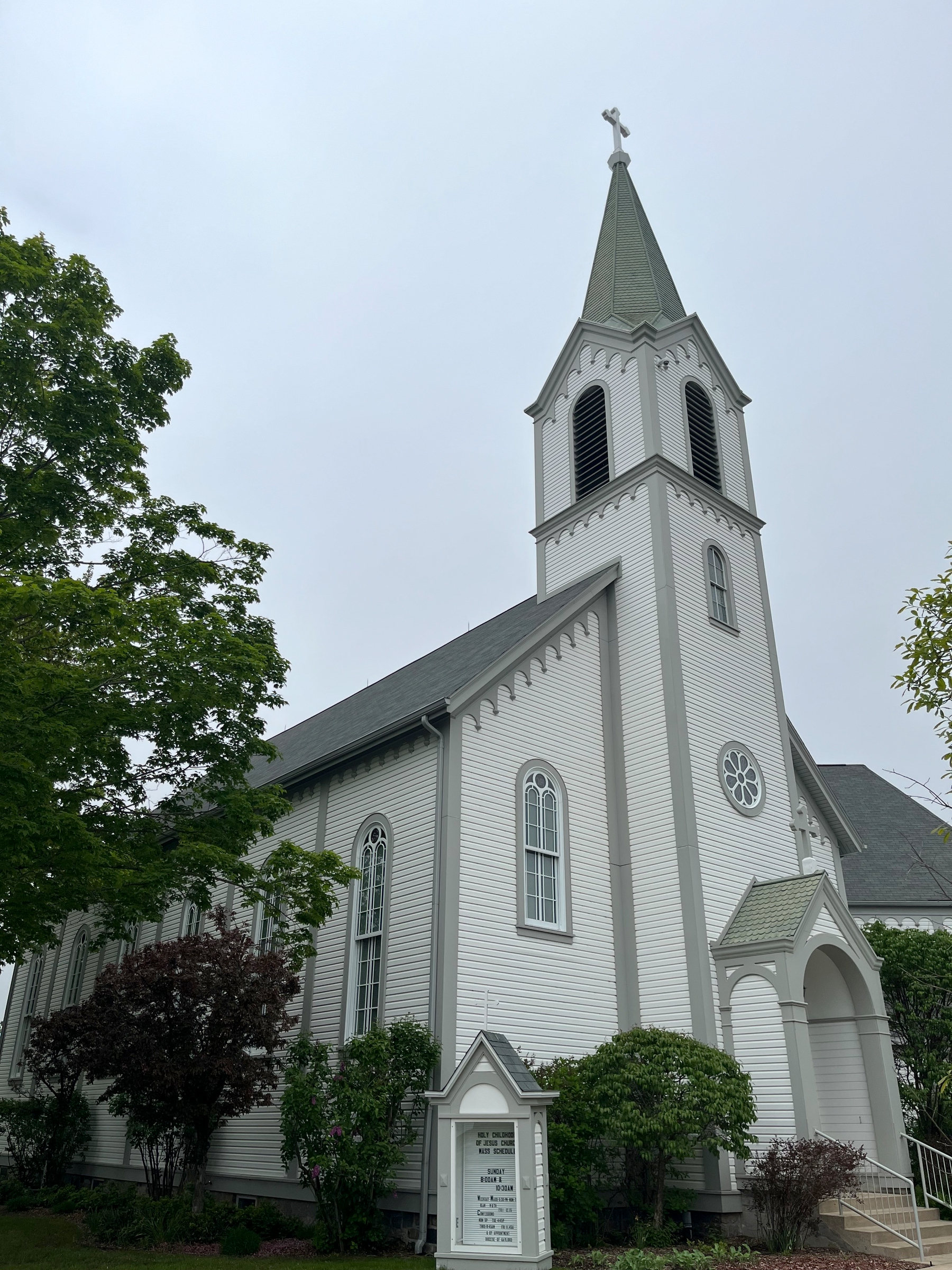
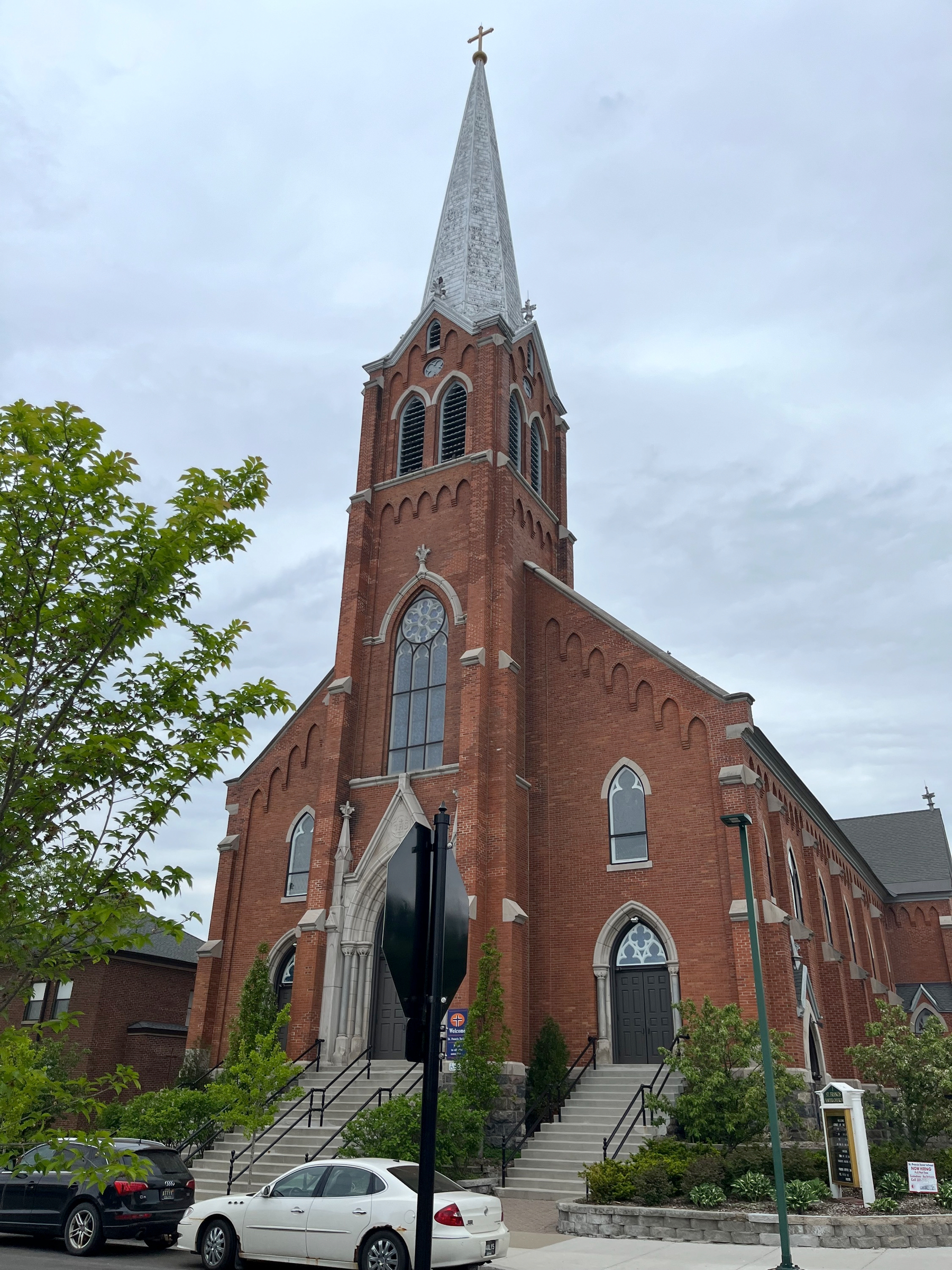
⛪️ Up North 📷
Judging from the headline and thumbnail of this endorsement editorial post the @houstonchronicle.com sounds like Southern Baptists in 1998.
According to the history I’ve perused my adopted home state of Michigan is a part of the story in making March 31st a day to recognize and contend with the embodied realities of trans people. Given the centrality of my religious faith to daily life I’m particularly interested in looking for examples of people who share my faith contending with their experience of sex and gender. Dwelling on this article from Sojourners this year.
Still reading Marsden today. Here’s an observation about how class dynamics may influence theological commitments I appreciated:
…a general point in modern church life: the more well-to-do a group, the less demanding its requirements for sanctification. Liberal Protestants, as a group, were better off socially than any other body of Protestants. For them virtue was found in the best developments of modern civilization and in their own lives. Traditional denominationalists stood somewhere in the middle, having more ambivalent attitudes toward how much of the world had to be renounced in order properly to live the Christian life. Near the far end of the spectrum were the holiness groups, speaking of much radical separation from worldliness but having, in a material sense, less of the world to renounce. (p. 42)
Perhaps its not surprising that the fundamentalists saw the mainline liberals as squishes…they were after all basking in the fruit of the social and economic advances wrought by the industrial revolution.
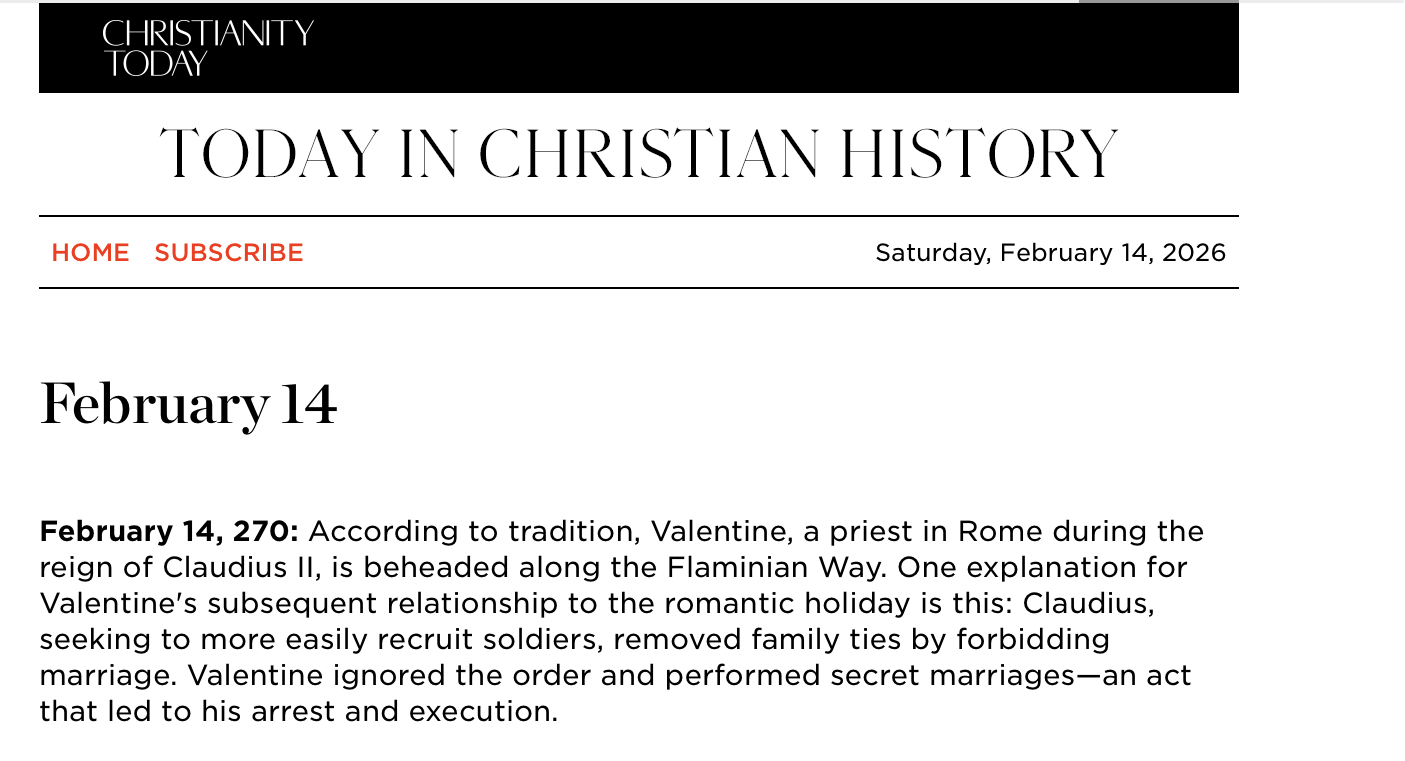
The story of St. Valentines’ connection to the modern holiday goes WAY harder than St. Nicholas’ connection to Christmas:
Ryan Burge articulating a concern I’ve held for a long time about the “doctrine is destiny”1 argument for Church growth:
Burge: I just think there’s a certain number of people who are drawn to certainty, and there are certain people who are repelled from certainty. And what does church look like for that second group, those doubtful people versus those certain people?
The mainline’s always been the refuge of the doubters, who try their best to believe these things but just can’t get over the hump sometimes. And if that goes away, if you’re Protestant, your only option is the evangelical pastor who pounds the pulpit and says: “If you don’t believe what we believe, you’re going to hell.” And the person sitting there goes: “Yeah, but how do you know that?”
That’s what we’re missing: This huge chunk of people who were open to the idea of belief are not going to have an outlet to go to a place where they really do feel like people like them are welcome and the conversation’s worthwhile, because it’s going to be: “Unless you believe what we believe, you are less than us.” And why would you want to go to a place where you feel like you’re less than, voluntarily? I certainly wouldn’t.
I would put an emphasis on the connection between certainty and ‘Unless you believe what we believe you are less than us.’ I think that sentiment manifests most frequently as communal subtext more often than being explicitly stated. This sentiment can go to really warped places when paired with a popular/shallow understanding of the doctrine of predestination. Having grown up in congregations that leaned or were populated predominately by conservative fundamentalists–even if there were statements meant to gesture rhetorically towards “your doubts are welcome here”–in practice what was communicated through the weekly preaching, statements of congregants, and broader of teaching was “your doubts are welcome here, but we’re going to work to excise them as quickly as possible or we may perceive you as a threat.”
Certainty can be a short term growth strategy. It will draw in people hungry for that mental/emotional/psychological security blanket. But I don’t think instilling certainty in doctrinal beliefs is the same as setting someone up for a life WITH God. If the good news (Gospel) is “you can be certain of what happens to you after you die if you believe what I believe” instead of “the Creator of the universe is restoring creation from its decaying state, and They want to do it WITH you” then what you may actually end up worshiping is the certainty, not the Creator.
framed succinctly: the argument goes that liberal or progressive Churches decline because they don’t hold firmly enough to core (Protestant) doctrines such as Scriptural inerrancy, salvation by confession+faith alone, or Jesus’s divinity. ↩︎

Civic holidays like the one that commemorates Martin Luther King Jr.’s Birthday provide an opportunity for me to reflect on what I think about the big stories we (U.S. citizens) tell about our nation, and how my views have changed as I’ve aged and the world has evolved. I find myself increasingly aggrieved by how significant portions of my faith community choose to interpret the significance of Dr. King’s legacy, and whether it does or doesn’t influence our mass voting behavior.
As a child of late 20th century U.S. schooling (both public and parochial), when taught about Dr. King and his legacy the artifact of choice was typically his ‘I Have a Dream’ speech and the March on Washington it accompanied. The speech and event were framed as one additional wrung on the ladder of the U.S.’s inevitable ascent towards liberty.
As I got older Letter from a Birmingham Jail took a place of greater prominence. Having spent most of my life participating in predominately white, conservative Christian communities, it wasn’t until college that I was awakened to the many complications and half-truths found in the K-12 narrative I was taught about U.S. history. The letter’s pointed message towards white moderates (like myself) remains an important and bracing critique.
Now, I’ve entered a stage of life where my civic/public consciousness has me turning more frequently to King’s Mountaintop speech. The speech’s charismatic (pentacostal) prophetic edge, and dogged determination to hold the U.S. to our highest stated ideals feels particularly relevant in an era when Federal policy is defined by cruelty and antagonism towards the most vulnerable members of our social fabric. The speech spends time reflecting on the parable of the Good Samaritan, with a small excerpt here:
And so the first question that the Levite asked was, “If I stop to help this man, what will happen to me?” But then the Good Samaritan came by. And he reversed the question: “If I do not stop to help this man, what will happen to him?”
That’s the question before you tonight.
I remain committed to practicing the faith (and still hold many of the doctrinal markers) engendered by my upbringing in evangelical Christianity. To our collective shame, many of my fellow white Evangelicals remain the bedrock supporters of a Federal administration that sees an increasing number of its citizens, other residents, and sojourners as threats to be neutralized rather than people who deserve to be treated with the equality demanded by our laws. I was told growing up that character is destiny when it comes to political leadership, and to see this principle abandoned for political expediency leaves a bitter aftertaste I can’t fully rinse out. I (perhaps naively) still believe the character axiom was basically correct.
May the parable of the Good Samaritan and the public witness of Believers like Dr. King–in partnership with the Holy Spirit–work like seeds sown into the hearts of my fellow evangelicals. I pray they not walk the same path as the Pharoahs in the book of Exodus and instead stop their hearts from hardening further.
Find a key excerpt of the Mountaintop speech here:


Apropos for today, an excerpt from ‘The Darkling Thrush’ which I was introduced too through yesterday’s Festival of Nine Lessons and Carols:
So little cause for carolings
Of such ecstatic sound
Was written on terrestrial things
Afar or nigh around,
That I could think there trembled through
His happy good-night air
Some blessed Hope, whereof he knew
And I was unaware.
Today, the U.S. supreme court is hearing oral arguments on a case involving Tennessee law with implications on whether states can ban gender affirming care for minors. I’m neither a constitutional lawyer, nor a medical expert - but I do hang out in conservative online forums, and when this topic comes up I inevitably see vitriol and violent rhetoric directed at the families and medical teams involved in gender affirming care circumstances. I see accusations of being butchers, mutilators, perverts and quacks. I once read a pamphlet published by an accredited Christian college that argued trans and queer social activists were a greater threat to the continuation of the U.S. than ISIS. It’s just gross. These families and medical professionals are often times facing difficult decisions about how best to support minors in acute embodied distress. For many of these kids this stuff has life or death implications.
This is why I personally despise framing culture-warring as some sort of civic or religious virtue. For a community that frequently asserts their fidelity to “judeo-christian” values, when it comes to discussing this particular cultural flashpoint I rarely see a single fruit of the spirit show up in the discussion. Let’s not dehumanize trans kids, their families, or their doctors.
